

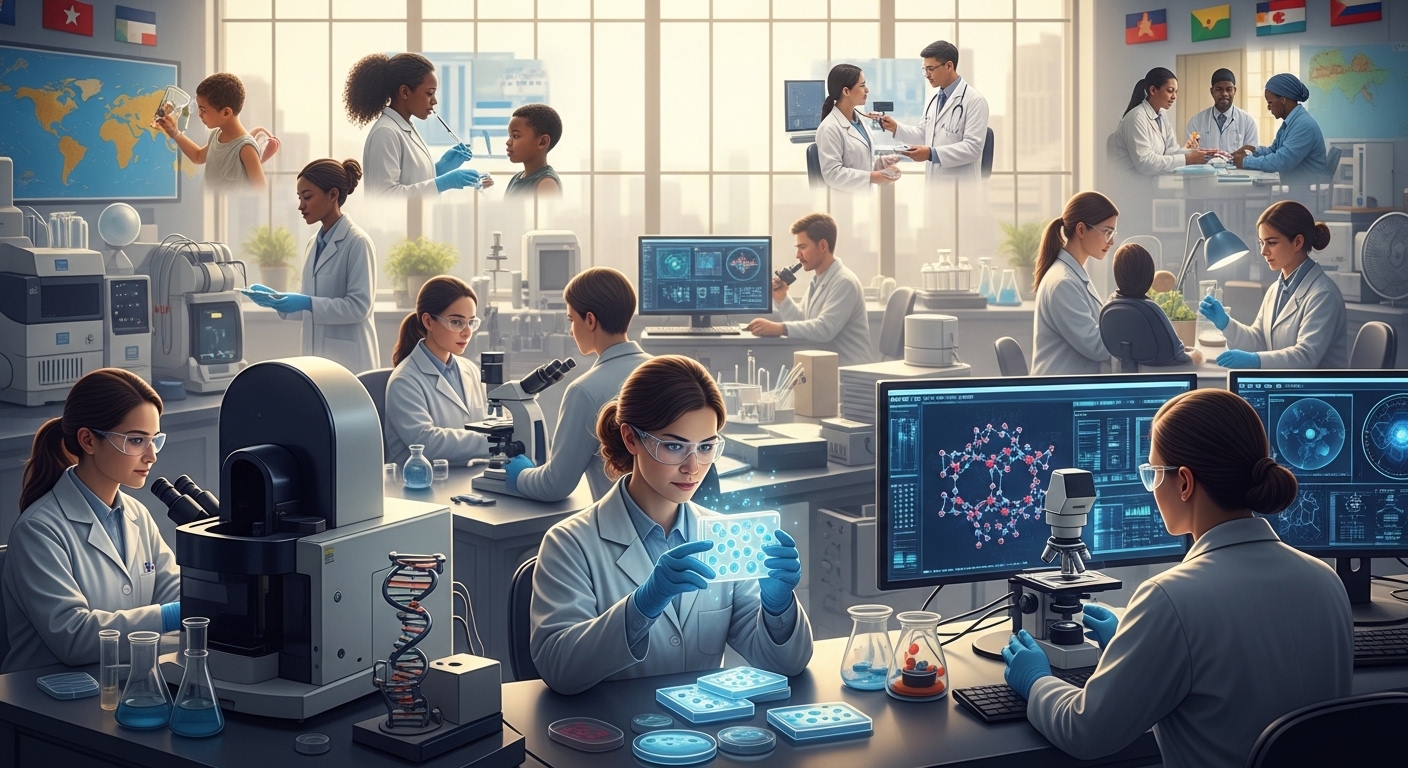
Medical research advances are significantly improving global health outcomes by enabling earlier diagnosis, more effective treatments, and better prevention strategies for diseases worldwide. Through innovations in biotechnology, pharmaceuticals, and digital health systems, modern medicine is extending life expectancy and enhancing quality of life across diverse populations and healthcare systems.
Breakthroughs in Medical Research
Genomic Medicine Progress
Genomic medicine is transforming healthcare by allowing scientists to understand diseases at the genetic level. This enables personalized treatment plans that are tailored to individual genetic profiles, improving accuracy and effectiveness in managing complex conditions.
Advanced Drug Development
Pharmaceutical research is accelerating drug discovery through advanced testing models and computational simulations. This reduces development time and helps bring life-saving medications to patients faster than traditional methods.
Vaccine Innovation Expansion
Vaccine research has made significant progress in preventing infectious diseases. New technologies such as mRNA vaccines are improving response times to outbreaks and strengthening global immunity systems.
Regenerative Medicine Growth
Regenerative medicine focuses on repairing or replacing damaged tissues and organs using stem cells and bioengineering techniques, offering hope for previously untreatable conditions.
Precision Medicine Adoption
Precision medicine uses data-driven approaches to design treatments based on patient-specific factors, increasing treatment success rates and reducing side effects.
Technology Driven Healthcare Transformation
Artificial Intelligence Diagnostics
AI systems are improving disease detection by analyzing medical images, lab results, and patient data with high accuracy, supporting faster clinical decisions.
Telemedicine Expansion
Telemedicine allows patients to consult healthcare professionals remotely, increasing access to medical services in rural and underserved areas.
Digital Health Monitoring
Wearable devices and mobile health apps are enabling continuous monitoring of vital signs, helping detect health issues early and manage chronic conditions effectively.
Robotics in Surgery
Robotic-assisted surgery improves precision, reduces recovery time, and minimizes risks during complex medical procedures.
Big Data Health Analysis
Healthcare systems are using big data to identify disease trends, improve hospital management, and support public health planning.
Global Disease Control Improvements
Infectious Disease Management
Advances in research have improved the ability to control and prevent infectious diseases through better diagnostics and treatment protocols.
Chronic Disease Treatment
Research is enhancing treatment options for chronic conditions such as diabetes, heart disease, and cancer, improving patient survival rates.
Early Detection Systems
New screening technologies allow diseases to be detected at earlier stages, increasing the chances of successful treatment.
Pandemic Preparedness Strengthening
Global research collaboration has improved preparedness for pandemics through faster vaccine development and surveillance systems.
Antimicrobial Resistance Solutions
Scientists are developing new antibiotics and treatment strategies to combat antimicrobial resistance, a growing global health threat.
Pharmaceutical Industry Innovations
Targeted Therapy Development
Targeted therapies focus on attacking specific disease cells while minimizing damage to healthy tissues, improving treatment outcomes.
Biologic Drug Advancements
Biologic drugs derived from living organisms are providing new treatment options for autoimmune diseases and cancers.
Faster Clinical Trials
Innovations in clinical trial design are reducing the time required to test new treatments while maintaining safety standards.
Drug Repurposing Research
Existing drugs are being studied for new uses, accelerating the availability of treatments for different conditions.
Affordable Medicine Expansion
Efforts are being made to reduce drug costs and improve access to essential medicines globally.
Role of Artificial Intelligence in Healthcare
Predictive Health Analytics
AI predicts disease risks by analyzing patient data, helping doctors take preventive actions before conditions worsen.
Medical Imaging Enhancement
AI improves the accuracy of interpreting X-rays, MRIs, and CT scans, assisting in faster diagnosis.
Virtual Health Assistants
AI-powered assistants provide patients with medical guidance, appointment scheduling, and health reminders.
Drug Discovery Acceleration
Machine learning models are speeding up the identification of potential drug compounds.
Personalized Treatment Planning
AI helps design individualized treatment plans based on patient history and medical data.
Public Health and Global Collaboration
International Research Partnerships
Countries are collaborating on medical research to address global health challenges more effectively.
Health Data Sharing Systems
Secure data-sharing platforms are improving global disease tracking and response coordination.
Vaccination Campaign Expansion
Global vaccination programs are reducing the spread of preventable diseases in developing regions.
Health Education Initiatives
Public health education programs are increasing awareness about hygiene, nutrition, and disease prevention.
Healthcare Infrastructure Development
Investment in healthcare infrastructure is improving access to quality medical services worldwide.
Challenges in Medical Research Progress
High Research Costs
Medical research requires significant funding, limiting access for smaller institutions and developing countries.
Ethical Considerations
Ethical concerns arise in areas such as genetic testing, human trials, and data privacy.
Regulatory Approval Delays
Strict regulations can slow down the approval process for new treatments and drugs.
Data Privacy Risks
Handling sensitive patient data raises concerns about privacy and cybersecurity.
Global Access Inequality
Not all populations benefit equally from medical advances due to economic and infrastructure gaps.
Future of Global Healthcare Innovation
AI Driven Healthcare Systems
Artificial intelligence will play a central role in diagnosis, treatment, and healthcare management.
Fully Personalized Medicine
Future treatments will be highly customized based on genetic, environmental, and lifestyle factors.
Smart Hospitals Development
Hospitals will become more automated and data-driven, improving efficiency and patient care.
Remote Surgery Expansion
Advanced robotic systems may allow surgeons to perform procedures remotely across countries.
Continuous Health Monitoring
Wearable and implantable devices will enable real-time health tracking and early intervention.
FAQs
How does medical research improve health outcomes?
It develops better treatments, diagnostics, and prevention methods.
What is precision medicine?
It is personalized treatment based on genetic and individual health data.
How is AI used in healthcare?
It assists in diagnosis, drug discovery, and patient monitoring.
Why is global health collaboration important?
It helps share knowledge and control diseases more effectively worldwide.
What is the future of medical research?
It will be more AI-driven, personalized, and globally connected.
Conclusion
Medical research advances are transforming global health outcomes by improving diagnosis, treatment, and disease prevention. With continuous innovation in biotechnology, pharmaceuticals, and artificial intelligence, healthcare systems are becoming more efficient and accessible. Despite challenges such as cost and inequality, the future of global health looks promising, driven by science, technology, and international collaboration.